
Single-phase and three-phase wastewater pumps differ primarily in their electrical power supply configuration and motor efficiency characteristics. A single-phase pump operates on a two-wire alternating current system commonly available in residential applications, while a three-phase pump requires a three-wire AC motor configuration typically found in commercial and industrial settings. This fundamental distinction affects pump performance, power consumption, starting torque, and electrical infrastructure requirements (National Electrical Code, 2023).
Why Power Phase Configuration Matters in Wastewater Pumping Systems
Contents
- 1 Why Power Phase Configuration Matters in Wastewater Pumping Systems
- 2 Key Characteristics of Single-Phase Wastewater Pumps
- 3 Key Characteristics of Three-Phase Wastewater Pumps
- 4 How Single-Phase and Three-Phase Motors Operate
- 5 Common Misconceptions About Wastewater Pump Phases
- 6 Single-Phase vs. Three-Phase Wastewater Pump Comparison
- 7 Practical Applications and Selection Criteria
- 8 Installation Requirements and Cost Considerations
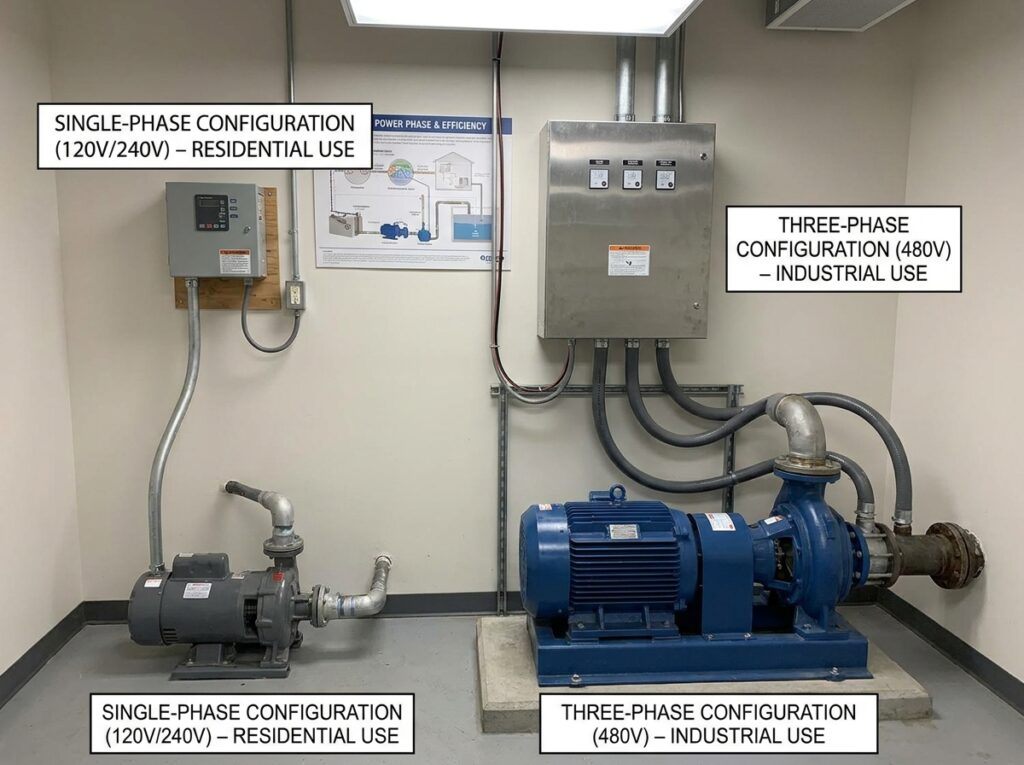
The phase selection between single-phase vs three phase wastewater pumps directly impacts motor efficiency, operational costs, and pump reliability. Three-phase power distribution provides more consistent electrical load balancing, resulting in 15-20% greater motor efficiency compared to single-phase systems. For wastewater management equipment handling sewage, effluent, or municipal wastewater, this efficiency difference translates to reduced energy consumption and extended motor durability over the pump’s lifespan.
Understanding single-phase vs three-phase pumps becomes critical when designing sewage system components or upgrading existing wastewater disposal systems. Residential pump systems typically operate on single-phase power due to electrical service availability, while pumping station equipment and lift station installations almost exclusively utilize three-phase motors for continuous duty operations.
Key Characteristics of Single-Phase Wastewater Pumps

Single-phase wastewater pumps exhibit five defining characteristics that determine their application suitability:
- Voltage Options: Standard pump voltage options include 115V and 230V configurations for residential sewage pump applications
- Horsepower Limitations: Single phase wastewater pump horsepower limitations typically cap at 3-5 HP for standard residential use
- Starting Mechanism: Requires a starting capacitor to generate initial motor starting torque, adding complexity to the electrical circuit
- Power Availability: Compatible with standard residential electrical service requirements without infrastructure upgrades
- Amperage Requirements: Single phase wastewater pump amperage requirements range from 10-30 amps depending on horsepower ratings
Key Characteristics of Three-Phase Wastewater Pumps
Three-phase wastewater pumps provide distinct advantages for commercial pumping equipment and industrial wastewater systems:
- Power Efficiency: Three phase wastewater pump efficiency benefits include 15-20% lower power consumption compared to equivalent single-phase models
- Starting Torque: Natural three phase wastewater pump motor starting torque eliminates the need for starting capacitors
- Horsepower Range: Three phase wastewater pump horsepower ratings extend from 1 HP to 100+ HP for industrial applications
- Continuous Operation: Three phase wastewater pump continuous duty rating supports 24/7 operation without thermal overload concerns
- Voltage Standards: Three phase wastewater pump voltage requirements include 208V, 230V, 460V, and 575V configurations
How Single-Phase and Three-Phase Motors Operate
Single-Phase Motor Operation: A single-phase pump motor receives alternating current through two electrical wires, creating a pulsating magnetic field. The motor requires a capacitor to generate the phase shift necessary for rotation initiation. This configuration produces starting torque approximately 50-75% lower than three-phase equivalents at identical horsepower ratings. The induction motor operates with higher electrical load fluctuation, generating more heat during continuous pumping cycles.
Three-Phase Motor Operation: Three-phase motors receive power through three separate electrical wires, each carrying alternating current offset by 120 degrees. This phase power difference creates a constantly rotating magnetic field that eliminates the need for starting capacitors. The balanced electrical load distribution across three phases reduces motor power consumption by 15-20% while delivering consistent running torque throughout the duty cycle. Motor protection devices such as thermal overload relays provide enhanced safety for wastewater treatment pumps.
Common Misconceptions About Wastewater Pump Phases
Myth: Single-phase pumps always cost less than three-phase pumps to purchase and install.
Reality: While single phase wastewater pump installation cost may be lower initially, three phase wastewater pump operating costs prove 20-30% lower over a 10-year lifespan due to superior motor efficiency ratings and reduced maintenance requirements.
Myth: You can easily convert any single-phase location to three-phase power.
Reality: Wastewater pump phase converter installation costs $1,500-$5,000 depending on horsepower requirements. Electrical service upgrade to true three-phase power from utility providers can exceed $10,000 for residential areas without existing three-phase electrical infrastructure.
Myth: Single-phase pumps are only suitable for small residential sewage systems.
Reality: Modern single phase submersible wastewater pump specifications support residential wastewater pump systems handling up to 10,000 gallons per day. However, best wastewater pump for residential use single or three phase depends on available power and duty cycle requirements rather than capacity alone.
Single-Phase vs. Three-Phase Wastewater Pump Comparison
| Feature | Single-Phase Pump | Three-Phase Pump |
|---|---|---|
| Power Supply | Two-wire AC, 115-230V | Three-wire AC, 208-575V |
| Motor Efficiency | 70-80% | 85-95% |
| Horsepower Range | 0.5-5 HP (typical) | 1-100+ HP |
| Starting Torque | Requires capacitor, 50-75% of three-phase | Natural, 150-250% of running torque |
| Energy Consumption | Higher per HP | 15-20% lower per HP |
| Electrical Infrastructure | Standard residential | Commercial/industrial |
| Motor Durability | Good (5-10 years) | Excellent (10-20 years) |
| Application | Residential, small commercial | Commercial, industrial, municipal |
Practical Applications and Selection Criteria
When to Use Single-Phase Wastewater Pumps: Residential wastewater pump single or three phase decisions favor single-phase for septic systems, residential sewage pump for home use, sump pumps, and effluent pumps under 3 HP. Single phase grinder pumps handle typical household sewage handling capacity of 2,000-8,000 gallons per day. These pumps suit applications with intermittent duty cycles where pump operational differences from three-phase models do not significantly impact overall sewage handling systems performance.
When to Use Three-Phase Wastewater Pumps: Commercial wastewater pump three phase benefits become essential for lift stations, pump stations, wastewater treatment facilities, and industrial wastewater systems requiring continuous operation. Three phase advantages include superior reliability for municipal wastewater applications processing 50,000+ gallons daily. Commercial sewage pump three phase benefits extend to reduced electrical cost analysis over time and enhanced motor performance characteristics under variable load conditions.
Installation Requirements and Cost Considerations
Electrical requirements for single phase wastewater pump installation include dedicated circuit breakers sized 25-30% above pump amperage, copper wiring systems meeting NEC standards, and proper motor protection through thermal overload devices. How to wire single phase wastewater pump procedures require matching voltage specifications with available electrical panel capacity and implementing appropriate motor control systems including float switches for automatic operation.
Three phase wastewater pump installation cost factors include electrical service availability, pump controller requirements, and control panel configurations supporting motor starter requirements. Commercial installations must verify three phase wastewater pump voltage drop considerations across wire runs exceeding 100 feet. For locations with single phase power availability, can single phase power run three phase wastewater pump through phase converter use adds $2,000-$7,000 to total project costs depending on pump capacity needs.
Wastewater pump selection criteria should evaluate electrical infrastructure costs, anticipated duty cycle, required pump performance metrics, and long-term operational efficiency goals. Consulting with a qualified electrical contractor and pump installer ensures compliance with electrical code requirements while optimizing pumping station equipment specifications. For comprehensive guidance on pump selection, refer to choosing the right submersible wastewater pump for your specific wastewater system design requirements.