
An Indiana grinder pump permit is the collection of approvals—typically a building permit, plumbing permit, and electrical permit—required before installing a grinder pump system that moves sewage from a residence to a low pressure sewer system or septic system. As of 2025, homeowners must coordinate with their local health department, municipal utility department, and building permit office before installation begins.
Why Grinder Pump Permits Matter in Indiana
Contents
- 1 Why Grinder Pump Permits Matter in Indiana
- 2 Key Characteristics of Indiana Grinder Pump Permit Requirements
- 3 How the Grinder Pump Installation Permit Process Works
- 4 Common Misconceptions About Indiana Grinder Pump Permits
- 5 Grinder Pump Permits vs. Septic Permits vs. Sewer Tap Permits
- 6 Practical Applications: Costs, Timelines, and Maintenance
- 7 Frequently Asked Questions

A grinder pump is a type of sewage ejector pump that macerates solid waste into a slurry, allowing it to travel through smaller-diameter pipes under pressure. Indiana requires permits for this equipment because improper installation can contaminate groundwater, damage municipal wastewater treatment facilities, and violate Indiana Administrative Code standards. According to the Indiana Department of Environmental Management (IDEM, 2024), unpermitted onsite sewage systems are among the leading causes of residential water contamination complaints in rural counties.
Permits also protect homeowners financially. Skipping the grinder pump permit application process can result in fines, forced system removal, or denial of future building permits for the same property.
Key Characteristics of Indiana Grinder Pump Permit Requirements
- Multi-agency approval: Requirements span the Indiana State Department of Health, local health department, county health department, and municipal utility department.
- Three permit types required: Most installations need a building permit, plumbing permit, and electrical permit for pump wiring.
- County-specific plumbing permits: Indiana county requirements for grinder pump installation vary; some counties add zoning requirements for septic systems.
- Licensed installer mandate: Indiana Plumbing Commission rules require a licensed plumber or certified septic system installer to perform the work.
- Inspection requirement: Grinder pump installation inspection requirements in Indiana mandate a final inspection before the system is approved for use.
How the Grinder Pump Installation Permit Process Works
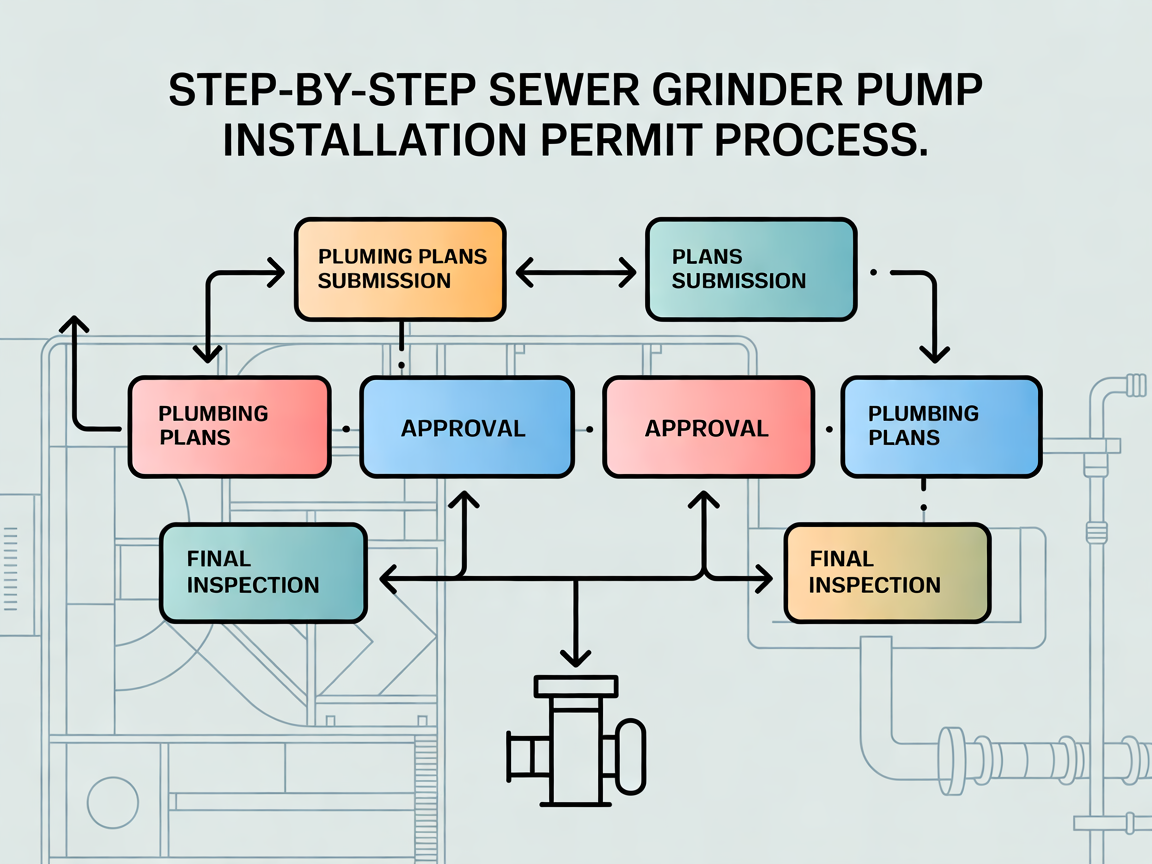
The Indiana grinder pump installation permit process generally follows these steps:
- Site evaluation: Contact your local health department or county surveyor’s office to determine if the property qualifies for a low pressure sewer system or must retain an onsite sewage system.
- Health department septic approval: If connecting to a septic tank, submit a septic system permit application to the county health department for Indiana onsite sewage rules compliance.
- Building permit application: File with your local building permit office for Indiana building codes for plumbing compliance.
- Plumbing and electrical permits: Apply separately for a plumbing permit and an electrical permit for pump wiring, since grinder pumps require dedicated circuits and backflow preventer installation.
- Sewer tap permit (if applicable): For residential sewer connection permit cases tied to a sewage utility company, apply for a sewer tap permit and pay the wastewater connection fee.
- Installation: A licensed septic system installer or licensed plumber installs the grinder pump according to grinder pump specifications Indiana codes require.
- Final inspection: The municipal utility department or local health department conducts a plumbing inspection to confirm building code compliance Indiana standards are met.
Where to Apply for a Grinder Pump Permit in Indiana
Homeowners should start at the local permit office contact listed on their county government website. In most Indiana counties, the process routes through three offices: the county health department (for septic-related approvals), the building permit office (for construction permits), and the municipal utility department (for sewer connection requirements Indiana regulates). Rural properties without municipal sewer access typically fall under Indiana rural sewer system permit requirements overseen by IDEM.
Common Misconceptions About Indiana Grinder Pump Permits
| Myth | Reality |
|---|---|
| Grinder pumps don’t need electrical permits. | Indiana plumbing code requirements mandate a separate electrical permit for pump wiring and circuit installation. |
| Septic permits cover grinder pump installation automatically. | A septic system permit application only covers the septic tank; grinder pumps connected to low pressure sewer systems need additional construction permits. |
| Permit rules are identical statewide. | Grinder pump permit requirements by county Indiana can differ based on zoning requirements for septic systems and local ordinances. |
| DIY installation is legal if the homeowner owns the property. | Indiana Administrative Code generally requires a licensed plumber or certified installer for sewage pump installation. |
| One permit fee covers everything. | Permit fees for sewer installation often include separate charges for plumbing, electrical, and wastewater connection fees. |
Grinder Pump Permits vs. Septic Permits vs. Sewer Tap Permits
Unlike a standard septic system permit, which governs an onsite sewage system contained entirely on private property, a grinder pump permit addresses equipment that actively pumps waste into a municipal or low pressure sewer system. A sewer tap permit, by contrast, authorizes the physical connection point to the public sewer line and is issued by the sewage utility company or municipal utility department.
In practice, a septic to sewer conversion permit often requires all three: health department approval to decommission the septic tank, a plumbing permit for the grinder pump system design, and a sewer tap permit for the final connection. This distinction matters because Indiana septic permit rules fall under the Indiana State Department of Health, while sewer tap permits fall under local utility jurisdiction.
Indiana Grinder Pump Regulations: State vs. Local Authority
IDEM sets statewide environmental standards for wastewater discharge, but local health departments and municipal utility departments administer day-to-day approvals. This dual structure means Indiana grinder pump regulations are enforced locally even though the underlying rules originate at the state level through the Indiana Administrative Code.
Practical Applications: Costs, Timelines, and Maintenance
Grinder pump installation cost in Indiana typically includes the equipment, labor, and permit fees. As of 2025, total permit fees for sewer installation often range from $150 to $600 depending on county and whether a sewer tap permit is required. Homeowners researching how long a grinder pump permit takes in Indiana should expect two to six weeks, depending on health department septic approval timelines and inspection scheduling.
For a step-by-step residential grinder pump permit checklist Indiana homeowners can follow, resources like an Indiana grinder pump permit guide can help clarify which local permit office contact to reach first and what documentation each agency requires.
Maintenance is also regulated. Grinder pump maintenance requirements under Indiana plumbing code often call for annual inspections, particularly for pump station installation permit holders connected to shared low pressure sewer system networks. Failing to maintain the system can violate the original construction permit terms and trigger reinspection by the municipal utility department.
Low Pressure Sewer Installation Guidelines for Indiana Homeowners
Low pressure sewer installation guidelines require grinder pump systems to include a backflow preventer, properly sized electrical service, and alarm systems for pump failure. These specifications are enforced during the plumbing inspection phase and documented in the Indiana wastewater permit application.
Frequently Asked Questions
Do I need a permit for a grinder pump in Indiana?
Yes. Indiana requires at minimum a building permit, plumbing permit, and electrical permit for any grinder pump installation connected to a low pressure sewer system or septic system.
How do I get a grinder pump permit in Indiana?
Contact your county health department and local building permit office to begin the septic system permit application and building permit process simultaneously.
What permits are needed for grinder pump installation in Indiana?
Required permits typically include a building permit, plumbing permit, electrical permit, and in some cases a sewer tap permit from the sewage utility company.
Understanding Indiana grinder pump permit requirements before installation prevents costly delays, inspection failures, and code violations. Because grinder pump permit requirements by county Indiana can vary, homeowners should always verify current rules with their local health department and building permit office before starting construction.